Calculated stationary-hover endurance
Initial model43.52 minRevised mass + auxiliary power34.23 min
−21.35% after the power budget is recalculated
Independent Archeion study · Air-vehicle power budget
Account for the full power budget.
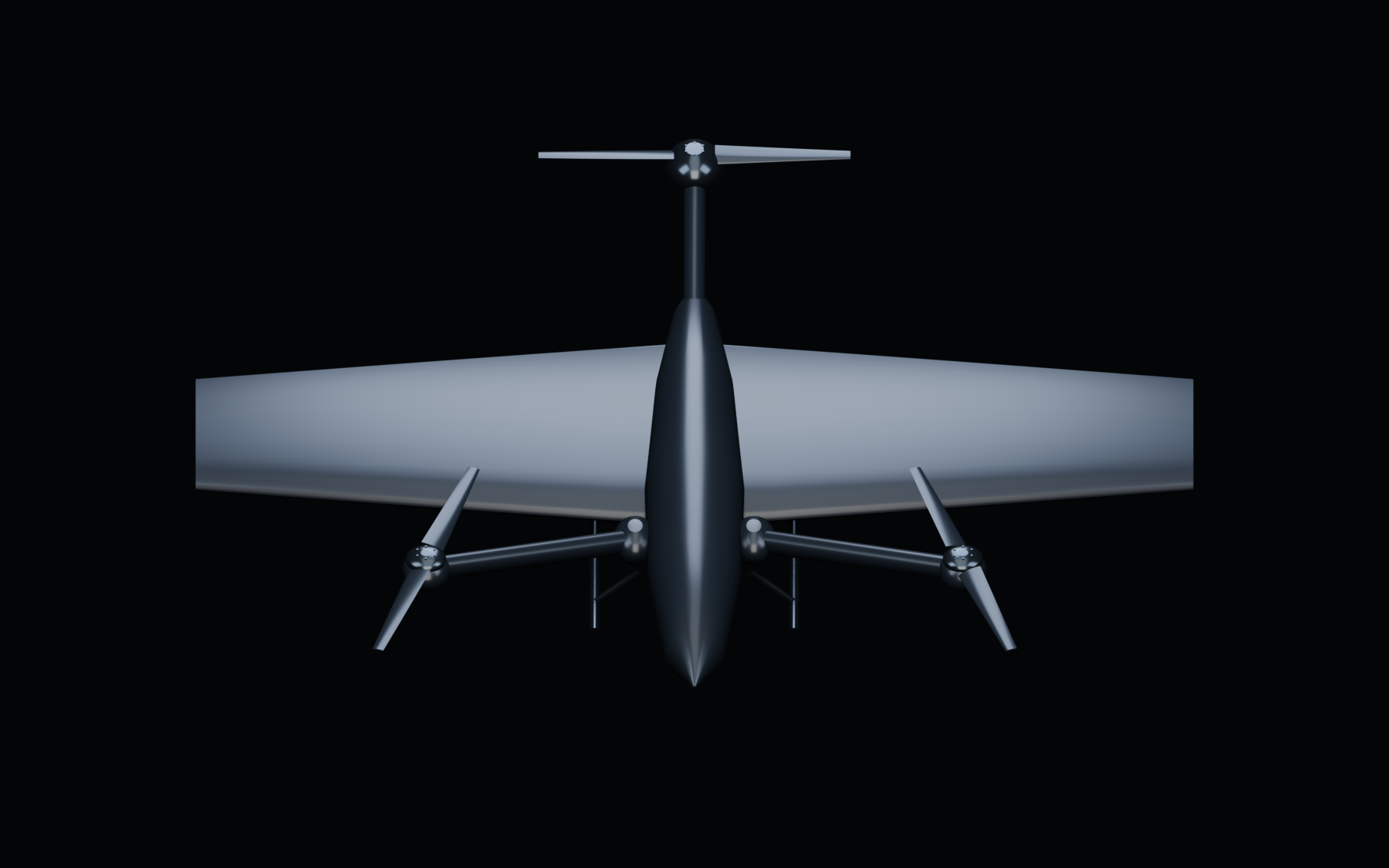
34.23min · revised calculated hover endurance
See what an auxiliary load changes.
How much endurance remains when auxiliary systems enter the design? Archeion linked an independent tri-rotor study configuration to its mass and power assumptions, then recalculated stationary-hover endurance.
The revised model gives 34.23 minutes, compared with 43.52 minutes initially. This is a budget correction rather than a performance improvement: the added loads make the calculated endurance estimate more complete.
The engineering decision
Measure the servo duty cycle before resizing the energy system.
The current model conservatively treats servo power as continuous. A measured duty profile would show whether to revise the battery capacity, auxiliary hardware or endurance requirement for the next candidate.
Method & context
The recorded calculation changed mass from 13.4918 to 13.6448 kg and auxiliary power from 0 to 348.6371 W. Calculated stationary-hover endurance changed from 43.5200 to 34.2277 minutes (−21.35%). Much of the auxiliary budget comes from the conservative continuous-servo assumption.
This is a preliminary design comparison. Hover endurance is calculated; flight, transition and assembly performance require physical testing. This presentation geometry is separate from the study’s energy-budget calculations; the rendering does not establish structural or aerodynamic performance.
Continue exploring
All case studies Next: public benchmark comparison ↗